What is a lanyard? A lanyard is a piece of personal protective equipment that connects a worker at height to a secure anchorage point through a safety harness. It helps protect workers using scaffolding systems against the risk of falling.
What is a lanyard? The use of lanyards during scaffold erection, dismantling, and maintenance work performed at height is important for occupational safety. The equipment must be correctly attached to a suitable anchorage point and assessed together with the safety harness being used. Depending on the intended use, lanyards may be shock-absorbing, double-leg, or equipped with different types of connectors.
What Does Lanyard Mean?
A lanyard is protective equipment that creates a connection between the safety harness of a worker at height and a secure anchorage point. In work areas where there is a risk of falling, it helps maintain a secure connection while allowing the worker to move.
Occupational safety practices require the selection to be made according to the working height, anchorage point, and the characteristics of the safety harness to be used. Shock-absorbing models are designed to reduce the impact of sudden forces that may occur during a fall.
Scaffold erection, facade work, roofing applications, and maintenance activities are among the areas where lanyards are commonly used. Working at height requires equipment that complies with appropriate standards and is connected to the correct anchorage point.
Single-leg and double-leg options offer different forms of use depending on the need for movement within the work area. Double-leg models can help maintain a secure connection while moving between anchorage points.
What Is a Double-Leg Lanyard?
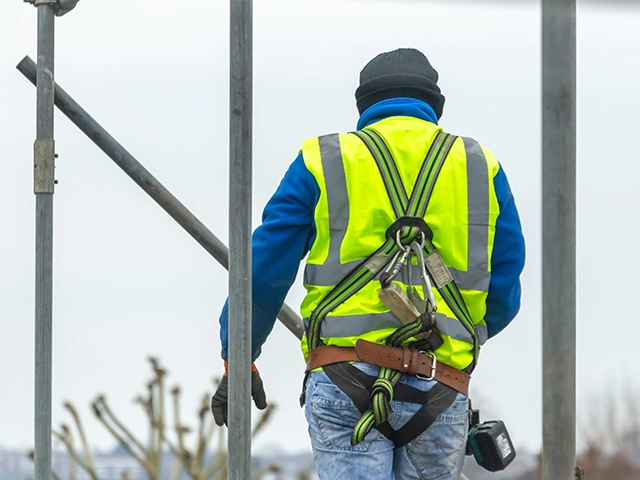
A double-leg lanyard is safety equipment that helps workers at height maintain their safety connection while moving between anchorage points. It has two separate connection legs.
After connecting one leg to a new anchorage point, the user can disconnect the other leg from the previous point. This method is particularly important for maintaining continuous connection during scaffold erection and facade work. Lanyards can be manufactured in different lengths and with different connectors and shock-absorbing features depending on the work area and intended use.
In double-leg lanyard safety systems, shock-absorbing components help reduce the impact of forces that may occur in a potential fall. The compatibility of carabiners and hooks with the intended anchorage point should also be considered for safe use. A double-leg design can provide an important advantage for workers moving between levels or anchorage points on scaffolding.
Double-leg models are primarily intended to enable safe transitions between anchorage points. The type of lanyard to be used should be determined by considering the working height, fall distance, anchorage structure, and the characteristics of the task being performed.
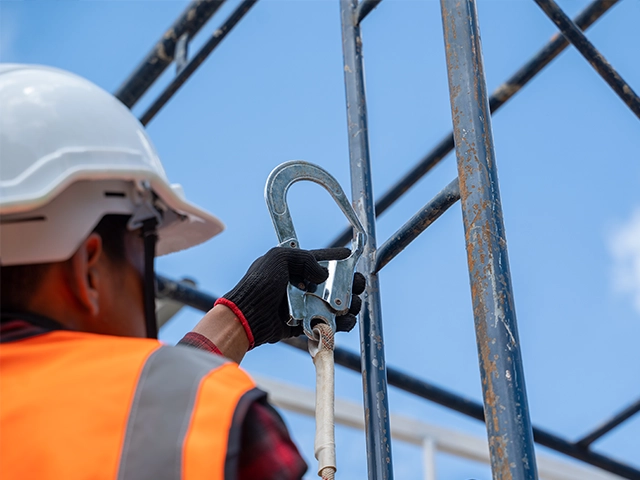
What Does a Lanyard Do?
A lanyard helps a worker at height remain connected to a secure anchorage point. Its primary function is to create a secure connection between the worker and the anchorage point in areas where there is a risk of falling.
Scaffold erection, facade applications, roofing work, and maintenance activities are among the areas where this equipment is frequently used. Safety harnesses used together with lanyards become an important part of personal protective equipment when the correct connection system is established.
For a lanyard to perform its function properly, a model suitable for the work area should be selected. The anchorage point, equipment length, fall distance, and characteristics of the harness being used should be evaluated together. Damaged or worn equipment, or equipment with unsuitable connectors, should not be used. Regular inspections and proper use are among the key elements of working-at-height safety.
What Are the Types of Lanyards?
Lanyards are available in different options depending on their method of use and technical characteristics. Working height, anchorage points, and movement requirements should be considered during selection.
By intended use:
- Positioning lanyard: Helps support the worker in a specific working position.
- Fall-arrest lanyard: Used with appropriate system components to maintain a secure connection against the risk of falling.
By number of legs:
- Single-leg lanyard: Has a single connection line and may be preferred in areas requiring a fixed connection.
- Double-leg lanyard: Helps maintain the connection while moving between anchorage points.
- Legged lanyard: Can be used in work areas that require movement with two connection legs.
By structural characteristics:
- Shock-absorbing lanyard: Contains a shock-absorbing component designed to reduce the impact of sudden forces that may occur during a fall.
- Elastic lanyard: Its flexible structure allows it to remain more compact when not in use.
- Rope lanyard: Covers connection models made with a rope structure.
- Webbing lanyard: Refers to options manufactured with a woven webbing structure.
Since lanyard types do not all serve the same function, selection should not be based solely on the model name. The type of work, anchorage arrangement, and compatibility with other personal protective equipment should be evaluated together.
Lanyard Prices
Lanyard prices may vary depending on the product structure, intended use, and connection equipment. Single-leg, double-leg, shock-absorbing, or positioning models may be available at different price levels. The ropes used, webbing structure, and connection hardware can also affect the cost.
The main factors affecting the price are as follows:
- Whether it is single-leg or double-leg
- Shock-absorbing feature
- Rope or webbing material
- Product length
- Type of carabiner and hook
- Elastic or fixed structure
- Technical standards and certifications
Lanyard prices should be compared by considering both the product cost and its suitability for the intended application. Selecting a product compatible with the safety harness and anchorage system is important for safety when working at height.
For detailed information about lanyards and working-at-height safety equipment, you can contact Gürbüz İskele.
Frequently Asked Questions
When choosing a lanyard, factors such as working height, intended use, anchor point, and compatibility with the safety harness should be considered. The product’s compliance with technical standards, the durability of its connectors, and its shock-absorbing features should also be evaluated.
Double-leg lanyards can be used in scaffolding installation, facade work, roofing applications, and maintenance activities. Their two connection legs help workers maintain a secure connection when moving from one anchor point to another.
A shock-absorbing lanyard is designed to reduce the impact force generated during a potential fall. When used together with a safety harness and a suitable anchorage system, it forms an important component of a fall arrest system.
When using a lanyard, ensure that the equipment is undamaged, properly connected to a suitable anchor point, and compatible with other personal protective equipment. Pre-use inspections should be carried out, manufacturer’s instructions must be followed, and both fall clearance and potential swing-fall risks should be assessed.