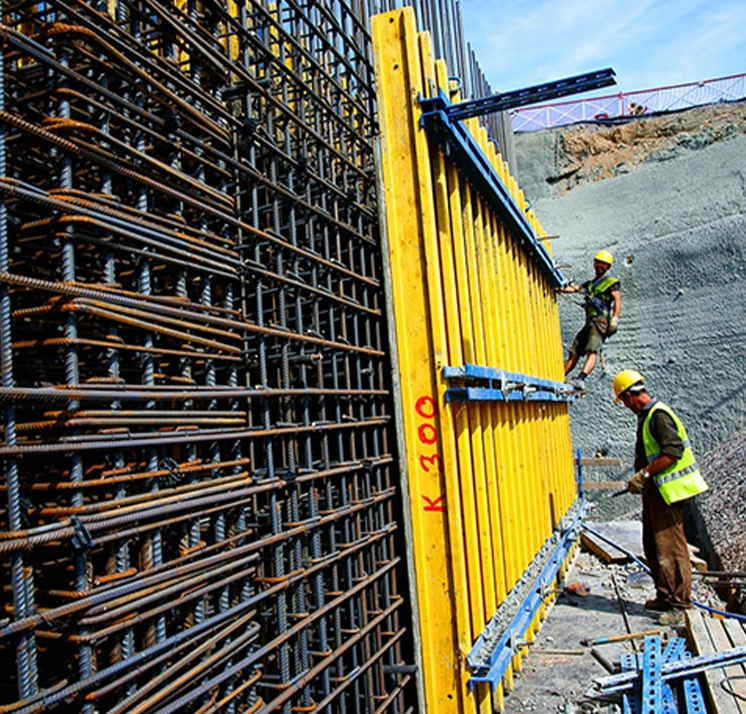
Formwork panels are one of the fundamental surface elements of formwork systems that help shape concrete in reinforced concrete structures according to the forms and dimensions specified in the project. The formwork surface, used in floor, beam, wall, and column applications, works in conjunction with load-bearing systems designed to withstand the loads created by fresh concrete, ensuring that the construction process is carried out in a controlled manner.
Formwork panels should be selected by considering the structural element for which they will be used, the project dimensions, the load-bearing arrangement of the formwork system, and the need for reusability together. In systems composed of wooden joists, plywood surfaces, and formwork-supporting scaffolding elements, proper material and system compatibility is crucial for planning the assembly process, achieving the desired concrete surface form, and ensuring efficient progress on the construction site.
Construction Formwork Board
Construction formwork panels are fundamental components of formwork applications used to prepare structural elements such as columns, beams, walls, and slabs in reinforced concrete structures according to the dimensions and shapes specified in the project. Panel-based formwork surfaces, such as plywood, can be used in various formwork applications with different size options. For this reason, formwork panels play a significant role in ensuring the smooth progression of the construction process among the building materials used on construction sites.
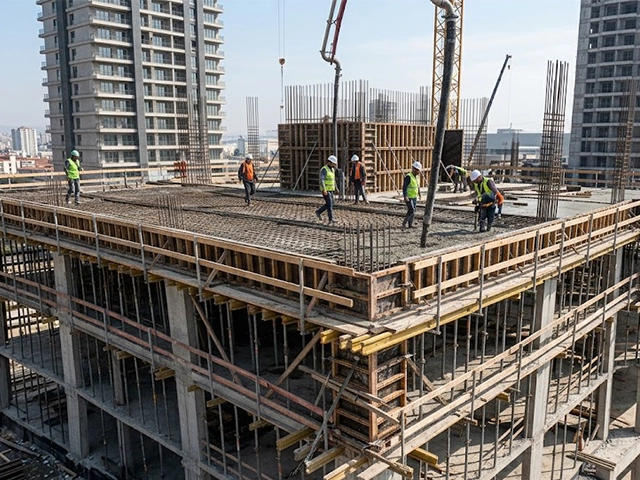
The method of using formwork panels may vary depending on the type of structural element, the load exerted by the concrete, the surface finish, and the formwork system used. In floor and beam applications, formwork boards work in conjunction with the supporting scaffolding system and wooden beams to help construct the formwork. In concrete formwork applications, it is important to prepare surface elements in appropriate dimensions, position connection points correctly, and ensure compatibility with the supporting system.
When selecting formwork boards, in addition to dimensions, the intended application area, the material’s suitability for working conditions, and its impact on the on-site application process must also be considered. A formwork system designed in a planned manner helps ensure that the concrete surface takes the shape specified in the project, that formwork assembly and disassembly operations are carried out in a more controlled manner, and that work proceeds in an orderly fashion across different sections of the structure.
Formwork Panel Dimensions
Formwork panel dimensions are determined by considering the dimensions of the reinforced concrete structural element and the characteristics of the preferred formwork system. Rather than using the same dimensions for different applications such as slabs, beams, columns, and walls, surface dimensions appropriate for the project’s needs must be selected.
The wooden and plywood surface elements in formwork systems are selected to work in conjunction with load-bearing beams, studs, and other auxiliary components. While a thickness of 18 mm is commonly preferred for plywood surfaces, a 1.6 cm thickness option may be available for the wood materials used in plywood formwork systems.
The dimensions available for formwork applications are as follows:
| Formwork surface / characteristics | Dimension |
| Plywood thickness | 18 mm |
| Thickness of the wood material used in the Pleymut formwork system | 1,6 cm |
| Panel dimensions used in the Pleymut formwork system | 1.20 × 2,40 m |
| Alternative panel dimensions | 0.90 × 1,80 m |
| Dimension adjustment | May vary depending on the project |
When determining the appropriate size, the position of the supporting formwork elements must be considered in addition to the dimensions of the board or panel. In flooring applications, it is important to position the surface elements in alignment with the beams and studs to ensure the concrete load is transferred evenly.
When selecting formwork boards, evaluating thickness, panel size, area of use, and the characteristics of the support system together helps create a formwork layout suitable for the application’s needs.
Formwork Panel Prices
Formwork panel prices may vary depending on the type of material used, product dimensions, thickness, and order quantity. In construction formwork applications, rather than evaluating only the unit price, one should also consider where the material will be used in the structure and how it will interact with the formwork system.
The main factors affecting formwork panel prices are as follows:
- Material type: Pricing may vary between wood planks, plywood, and various panel products.
- Thickness: Prices may vary because products with greater thickness require more material.
- Dimensions: The size of the panels or boards can directly affect the total material requirement and cost.
- Surface characteristics: Products with coatings or specific surface characteristics may be offered at different price ranges.
- Order quantity: The total number of products or linear meters required for the project can be a determining factor in pricing.
- Intended use: The product specifications required for flooring, columns, beams, and wall applications may vary.
When evaluating formboard prices, project dimensions, area of use, material properties, and the total quantity required should all be considered together.
Plywood Formboard
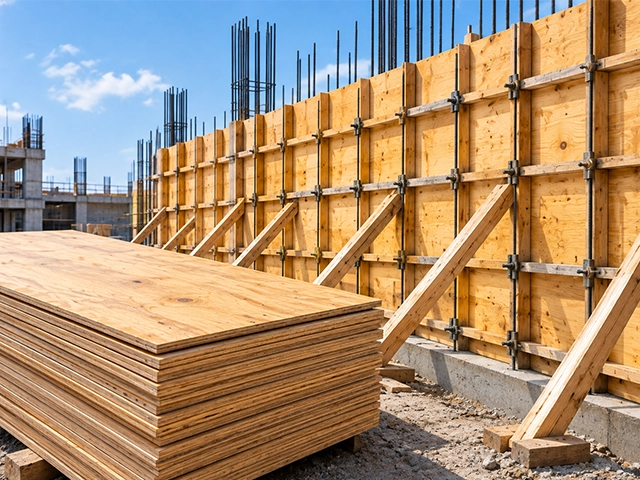
Plywood formwork is among the panel-based materials preferred for creating formwork surfaces in reinforced concrete applications. With its multi-layered structure, plywood can be used as a surface element in various formwork applications. When selecting plywood formwork, the panel’s thickness, surface structure, area of use, and compatibility with the support system should be evaluated. Reusability is another criterion that can be considered when selecting a product.
Plywood prices may vary depending on the panel’s dimensions, thickness, material properties, and order quantity. When determining the appropriate plywood for a project, it is essential to evaluate technical specifications that align with the application conditions rather than relying solely on price comparisons.
Formwork for Sale
When selecting formwork panels for sale, the formwork system in which the material will be used, the project dimensions, and the expected surface performance must first be determined. While plywood and wooden formwork elements serve different purposes in various formwork applications, panel-based products can be used to create large formwork surfaces.
The dimensions, thickness, and physical condition of wooden formwork elements must be evaluated in accordance with the assembly layout and intended use. Accurately calculating the required quantity during the purchasing phase and preparing a cutting and installation plan in advance helps ensure more controlled management of material usage. The compatibility of the formwork panels with other load-bearing elements is also a key consideration in the selection process.
Frequently Asked Questions
Formwork boards are used to shape structural elements such as columns, beams, walls, and slabs in reinforced concrete structures according to the project requirements. The formwork surface works together with supporting elements to help safely withstand the loads created by fresh concrete.
Formwork boards generally refer to wooden surface elements, while plywood is a multi-layered sheet material used in formwork applications. Plywood is available in different sizes, thicknesses, and surface properties and can be used in various concrete formwork applications.
The number of times a formwork board can be reused varies depending on the type of material, surface properties, concrete application, working conditions, and how the formwork is removed. Therefore, rather than specifying a fixed number of uses, the physical condition of the material and its suitability for reuse should be evaluated.
When purchasing formwork boards, factors such as the structural element where they will be used, material type, thickness, sheet dimensions, surface properties, total quantity required, and compatibility with the existing formwork system should be considered. Determining the dimensions required for the project in advance makes material selection easier.