Façade scaffolding is a temporary support system that enables maintenance, repair, insulation, painting, and façade cladding work on the outside of buildings to be carried out safely and efficiently. Different scaffolding systems may be selected depending on the building’s height, architectural features, and the nature of the work.
When selecting façade scaffolding, load capacity, material durability, installation method, and the project’s technical requirements should all be considered together. Used across a wide range of settings, from residential projects to commercial buildings and industrial facilities, these systems can be designed to suit different building types and façade structures.
Façade Scaffolding for Sale
Façade scaffolding for sale is one of the preferred solutions for companies that need a scaffolding system for long-term use or across multiple projects. During the purchasing process, factors such as durability, ease of installation, load capacity, intended use, and compliance with applicable safety standards should be considered together. Façade scaffolding selected to suit the project helps create safe working conditions and supports the efficient completion of work within the planned schedule.
Scaffolding systems used in construction projects have different features depending on the type of work and the working conditions. Commonly used scaffolding types include:
| Scaffolding Type | Description | Application | Standards Compliance |
|---|---|---|---|
| H-Type Safety Scaffolding | Façade scaffolding made of modular steel components that provides a safe working platform. | External insulation, painting, plastering, façade cladding, restoration, and maintenance work | Systems compliant with TS EN 12810 and TS EN 12811 should be preferred. |
| Flange Scaffolding System | A modular scaffolding system that adapts to different heights and complex projects through its flange connection design. | Industrial facilities, power plants, bridges, factory maintenance, and special projects | It should be used in compliance with TS EN 12810 and TS EN 12811. |
| Mobile Scaffolding System | A system with wheels that can be transported easily and moved around the work area. | Indoor applications, maintenance, installation, and technical service work | It should be used with equipment that complies with the applicable safety standards for mobile scaffolds. |
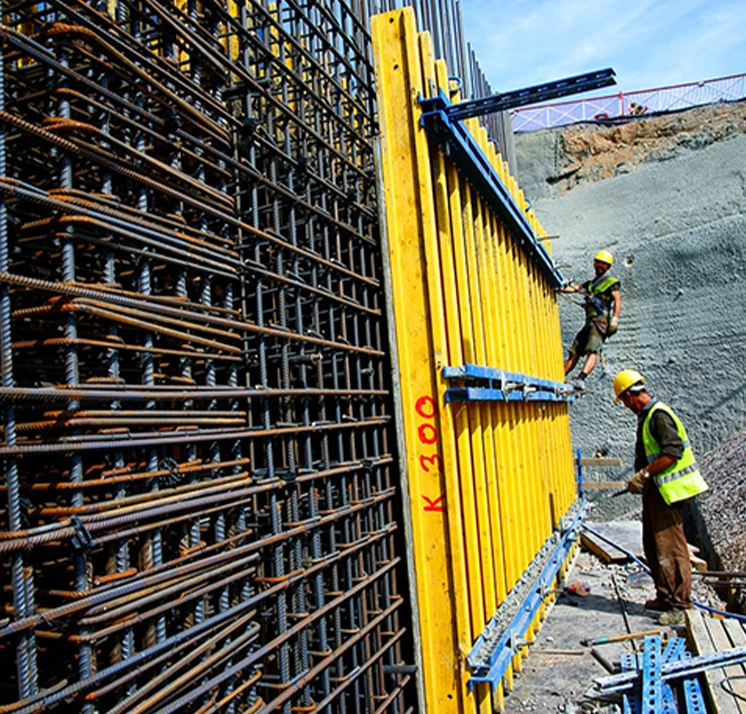
| Shoring Scaffolding System | A support system that safely carries formwork loads in reinforced concrete structures. | Residential, commercial, industrial facility, and infrastructure projects | It should be installed in accordance with project calculations and applicable construction standards. |
Each scaffolding system offers solutions for different applications. While H-type safety scaffolding is widely used for façade work, flange scaffolding systems provide greater flexibility on industrial projects. Mobile scaffolding is ideal for short-term work that requires movement, while shoring scaffolding plays an important role in the structural construction of reinforced concrete buildings. Selecting scaffolding suited to the project conditions helps create a safe working environment and supports a more efficient application process.
Façade Scaffolding Installation
Scaffolding installation is a systematic process carried out with planning and safety checks suited to the project’s technical requirements. Installing the scaffolding in accordance with applicable standards is essential both for worker safety and for ensuring that work processes run smoothly. The scaffolding system to be used should be selected based on the building’s height, façade structure, and working conditions.
The installation process generally consists of the following steps:
- The ground is inspected: The stability, load-bearing capacity, and surface condition of the area where the scaffolding will be installed are assessed.
- The materials are prepared: Scaffolding components are checked to ensure they are complete, sound, and suitable for use.
- The supporting structure is assembled: Vertical and horizontal components are installed in accordance with technical requirements.
- The platforms and guardrails are installed: Working platforms and safety equipment are set up in compliance with applicable standards.
- The anchors are secured: The system is fixed to the structure at the required points to improve safety.
- Final checks are carried out: All connections and safety features are inspected before the scaffolding is made ready for use.
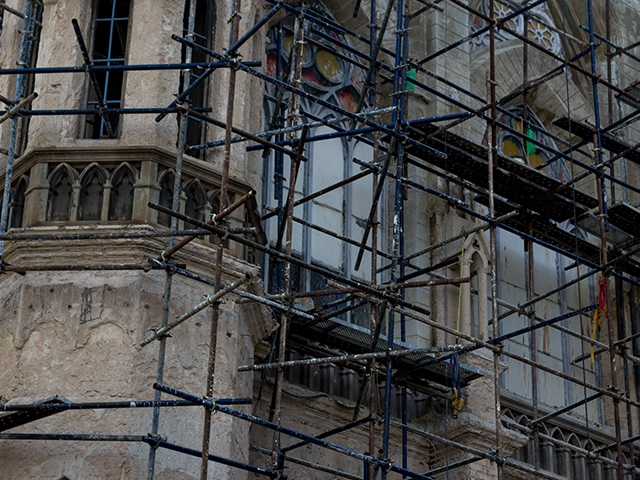
Depending on the project scope and duration, scaffolding rental or purchase can be considered. The construction scaffolding selected should have features suited to the working height and the needs of the application area. When properly installed, façade scaffolding systems that can be adapted to different projects provide a safe, organized, and efficient working environment for maintenance, external insulation, painting, and façade cladding.
What Should You Consider When Choosing Façade Scaffolding?
The right façade scaffolding should be selected by assessing safety standards, material quality, load capacity, and the project’s technical requirements together. Choosing suitable scaffolding helps ensure workplace safety and contributes to a more efficient application process.
Technical Characteristics of the Building
The appropriate scaffolding system should be selected by considering technical details such as the façade shape, number of floors, and width of the work area.
Material Quality
The quality of the steel and connection components used in scaffolding systems is important for safe use and a long service life. Durable materials reduce maintenance needs while helping maintain system performance.
Safety Standards
The selected façade scaffolding system must comply with current occupational safety standards. Systems that meet safety requirements help reduce potential risks in the work area.
Compliance with TS EN 12810 and TS EN 12811
Scaffolding systems manufactured in accordance with these internationally recognized standards meet an important criterion for safe use.
Load Capacity
The loads from personnel, equipment, and materials that the scaffolding will carry should be calculated in advance. Choosing a system with a load capacity suited to the project’s needs helps create a safe working environment.
Load Calculation
Scaffolding systems selected to suit the expected load values help prevent structural risks during use.
Ease of Installation and Dismantling
Modular scaffolding systems can be installed and dismantled quickly, helping the work schedule run more efficiently. The ability to reuse the same system across different projects is another significant advantage.
Advantages of Modular Systems
Easy-to-assemble modular systems save time and help manage labor costs more effectively.
Technical Support and Spare Parts
Easy access to technical support and spare parts is important for keeping a scaffolding system in service over the long term. Companies that provide after-sales service help maintenance and refurbishment work proceed more quickly.
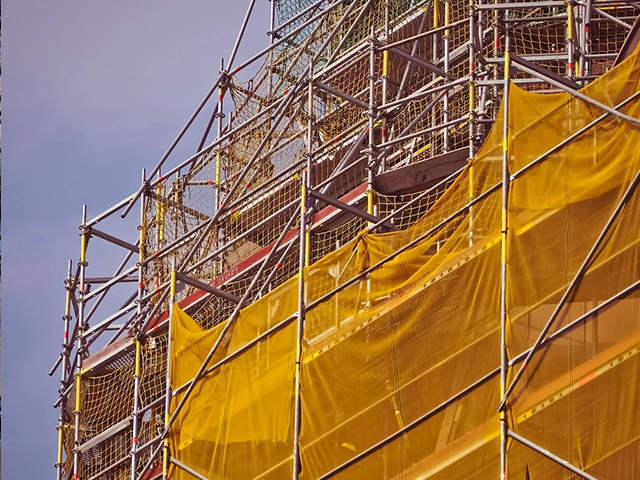
Used Façade Scaffolding
Façade scaffolding used on different projects has technical features that vary according to the building’s height and the work area. Platform scaffolding solutions provide a spacious working surface, helping create an organized work environment for maintenance, painting, external insulation, and façade cladding while allowing workers to move safely.
Used façade scaffolding is one option for businesses and contractors looking to manage their budgets. However, before choosing used equipment, its condition should be carefully inspected, including any deformation, whether all connection components are present, the soundness of load-bearing parts, and its previous conditions of use. For safe use, it is important to confirm that the equipment’s technical specifications meet the project’s needs and comply with applicable standards.
Fully Guarded Façade Scaffolding
Fully guarded façade scaffolding is designed to support worker safety on projects that require working at height. It is a scaffolding system made up of guardrails, toe boards, secure platforms, and sturdy connection components.
When installed in accordance with applicable standards, these systems create a safe working area for external insulation, painting, façade cladding, maintenance, and restoration work. Regular inspections and installation by qualified teams are important for ensuring the system can be used safely.
For short-term projects, safety scaffolding rental can be considered as an alternative to purchasing. When selecting a system for safety-focused façade work, its load capacity, connection design, and compliance with applicable standards should all be assessed to determine the right solution.
Façade Scaffolding in Ankara
Selecting the right scaffolding system for construction projects in Ankara and the surrounding area is important for ensuring safe working conditions and efficient workflows. Construction scaffolding selected according to the project’s height, façade structure, and application area helps create a safe working environment.
Because every building has different technical requirements, load capacity, modular design, durability, and compliance with applicable standards should all be considered when selecting a scaffolding system for your project. This helps provide a safe, durable solution suited to the project.
Gürbüz İskele, based in Ankara, offers solutions for different sectors with façade scaffolding, flange scaffolding, mobile scaffolding, and shoring scaffolding systems. Contact our expert team to find the right system for your project and get more information.